
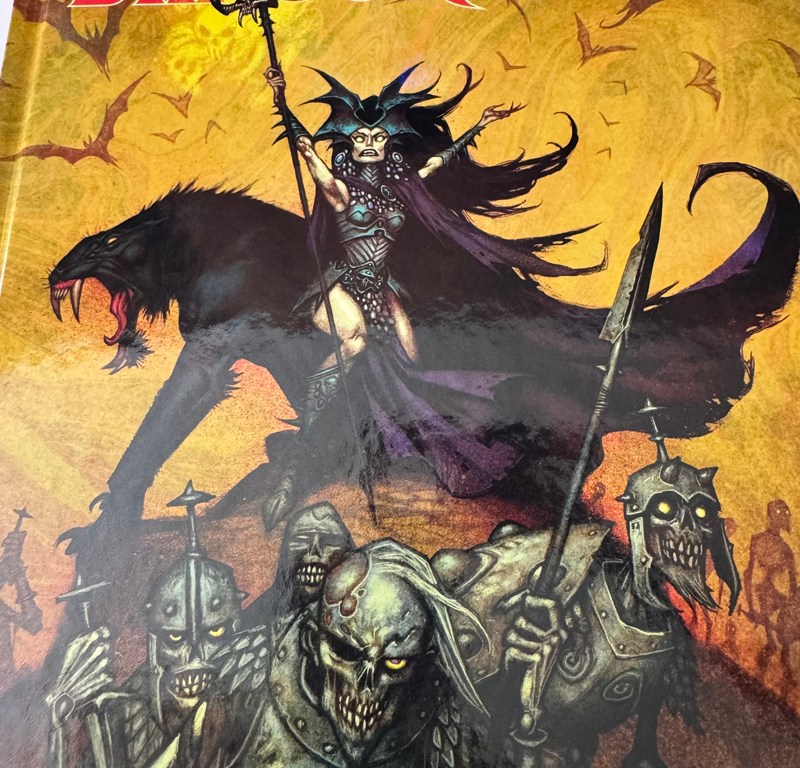
For those who don’t know, Free League’s Dragonbane is a classless d20 fantasy role playing game based on an 80’s Swedish game. Combat is fast, the flow of the game encourages role playing, and it manages to play like an OSR game with enough modern touches to keep current gamers happy (if you want to read about some of my sessions I ran as GM to get an idea of what the game is about, check out my Secrets of the Draaken Emperor campaign summaries).
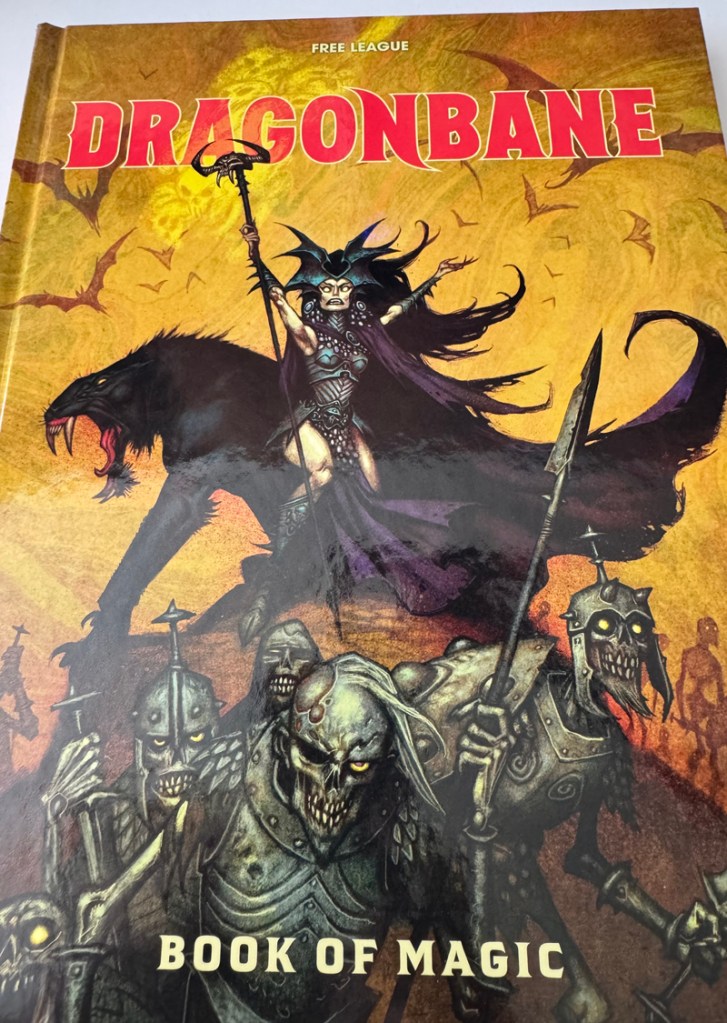
The Book of Magic for Dragonbane is a 138-page hardcover with 300 spells across nine new and flavorsome schools of magic:
- Demonology – Demon-based spells – yeah, they all do basic stuff (a gust of demonic wind, throwing a demonic carbuncle for damage, a dimensional slip to avoid damage, etc.), until you get to rank 4 (you need to make a pact with a demon to learn higher rank spells) and you can summon a demon with a somewhat open-ended spell that lets you choose any demon from the rulebook or bestiary to do your bidding. Yes, they may prove difficult to return, and I’m sure that will lead to lots of high jinks, but maybe GMs should choose the demon summoned rather than allowing players to…
- Harmonism – Spells via vibrations e.g. music – yep, here are the bard spells. Spells to buff or protect the party, control people, cause frenzies or compel creatures to dance, breaking stuff; all the way up to razing buildings by rank 5.
- Illusionism – Spells to cast illusions, confuse and confound people, create mirror images, blink – I mean ‘shadow leap’ (how D&D of me), all the way up to altering reality to create vehicles and buildings indistinguishable from real objects (until the spell ends, that is).
- Necromancy – Anything to do with speaking and raising the dead. Eventualy you’ll be able to defy death by creating a vessel for your spirit to transfer to if you kark it (‘die’ in Aussie).
- Symbolism – The art of inscribing symbols to perform magic. There are runes for shielding, wards, consuming magical energy, creating portals, and petrifying creatures.
- Witchcraft – Has a number of spells similar to druids, including taking on animal senses, bestial traits and shapeshifting into beasts. Also included are witchy curses and hexes, prophecy and polymorphing.
- Alchemy – All about crafting potions from cool ingredients (Troll bile, anyone?). Brews to cure conditions, create poisons and antidotes, acidic sludges, healing potions, and eventually creating gold and homonculi.
- Enchanting – Making magic items from scratch! Create your own unique magic items by combining numerous abilities using the ranked spells. Make endless capacity bags and potion bottles, epic armor and weapons, etc. There’s even a section on cool legendary artifacts GMs can insert into their games.
- Dracomancy – A very powerful school with the ability to unbalance the game – all the spells here are rank 6! Seize control of a dragon, create objects out of thin air, erase people from reality, reverse time (just to mention a few effects).
Aside from all the new content, I really appreciate the inclusion of all of the existing magic schools included in the original Dragonbane rules, as well as the spell rank diagrams, which show in a visual way where the spells fit by rank and their pre-requisites (some of us are visual learners). A few of the original spells have been updated for balance. Having all the spells in one book makes it much easier for GM and players to reference the definitive versions of spells, without having to refer to multiple tomes. The Book of Magic is well worth the investment by any Dragonbane GM.
The Book of Magic, which I supported in a recent Kickstarter, and is now available at Free League’s website.
Following is a preview of the entire book – pause the video to check out individual pages.


I once played a similar system where the turn structure felt too slow for a modern campaign. That pacing makes the action feel sluggish compared to current tabletop experiences.
LikeLike
Similar system? Do you mean not Dragonbane? In all the Dragonbane games I’ve GM’d the combat has been fast paced and free flowing. Much faster than DnD and Pathfinder. 😊
LikeLike